A longer service life is one of the main reasons people pay more for a tankless water heater. The figure is real but conditional: it assumes the heater was sized and installed correctly and that scale, freezing and venting problems are kept in check. This guide gathers what a U.S. Department of Energy-funded building guide and manufacturer documents say about tankless lifespan, how a warranty table hints at the parts makers expect to last, and which maintenance habits protect that investment.
Expected lifespan of a tankless water heater
Short answer A tankless water heater is generally expected to last up to about 20 years, compared with 10–15 years for a tank-type heater, according to the DOE-funded PNNL Building America guide. Reaching that figure depends on regular maintenance, especially descaling in hard-water areas, and on a correct installation.
A. O. Smith’s installation guide, citing Energy.gov, says most units have a life expectancy of over 20 years but require periodic maintenance to get there. Those are general expectations, not guarantees for a specific heater, and neither source attaches a lifespan to a particular brand or model.
- Typical expectation: up to roughly 20 years for tankless, versus 10–15 years for a tank.
- Main condition: periodic maintenance, including heat-exchanger cleaning where water is hard.
- Main risk: scale, freezing, vent blockage and poor water quality, which warranties exclude.

What shortens tankless service life
Scale is the most common threat. PNNL explains that in hard-water areas scale can build up on the piping inside the heat exchanger, reducing capacity and efficiency and, in extreme cases, causing complete failure. Freezing is the second: PNNL notes outdoor tankless installation generally suits only warm climates unless both the unit and its water lines are freeze-protected.
Manufacturer warranties list the same failure causes. Rinnai’s SENSEI residential warranty excludes improper maintenance, citing scale build-up, freeze damage and vent blockage, and also excludes damage from poor water quality, condensate damage, improper venting, incorrect gas type and incorrect gas or water pressure. Read together, these exclusions are a practical checklist of what to prevent.
Installation quality is the hidden variable. The DOE Energy Saver page says proper installation depends on fuel type, climate, local building code requirements and safety issues, especially for gas-fired units, and recommends a qualified plumbing and heating contractor who provides written cost estimates, references and any required local permit. A heater that starts life with an undersized gas line, a poorly routed vent or no isolation valves is harder to maintain, and the warranty may not cover the consequences.
| Risk | Effect | Prevention named in the sources |
|---|---|---|
| Scale in the heat exchanger | Lower capacity and efficiency; possible failure | Periodic cleaning; isolation valves fitted at installation (PNNL) |
| Freezing | Freeze damage, excluded from warranty (Rinnai) | Indoor placement or freeze protection for unit and pipes (PNNL) |
| Vent blockage | Excluded from warranty (Rinnai) | Vent terminations above the expected snow line in cold climates (PNNL) |
| Acidic condensate | Damage to drain pipes over time (PNNL) | Condensate drain plus a maintained neutralizer (PNNL) |
| Wrong sizing or gas type | Excluded from warranty (Rinnai) | Model-specific sizing and fuel confirmed by the installer |
What a warranty table tells you
A warranty is not a lifespan prediction, but it shows which components a manufacturer is willing to stand behind and for how long. Rinnai’s SENSEI residential limited warranty is a clear example of the usual structure: the heat exchanger carries the longest coverage, other parts less, and labor the least.
| Item | Residential | Commercial |
|---|---|---|
| Heat exchanger | 15 years or 12,000 operation hours, whichever first | 8 years or 12,000 operation hours |
| All other parts and components | 5 years | 5 years |
| Reasonable labor | 1 year | 1 year |
The fine print matters as much as the headline. Under that document, coverage drops to 8 years or 12,000 hours if temperature settings exceed 160°F, it ends if the heater is moved to a new location, and proof of purchase is required, either a dated receipt or registration within 30 days. Other brands and model lines use different terms, so read the warranty for the exact model you are considering in our indoor natural gas comparison or the electric comparison.
Maintenance that protects the service life
PNNL notes that many manufacturers recommend professional yearly cleaning of the heat exchanger with a mild acid solution, and that “flush kit” isolation valves fitted during installation make this easier. The exact interval and procedure belong to your owner’s manual and service professional; our maintenance and descaling guide explains how to plan it without improvising.
- Keep the manual: the model-specific maintenance section sets the schedule and approved method.
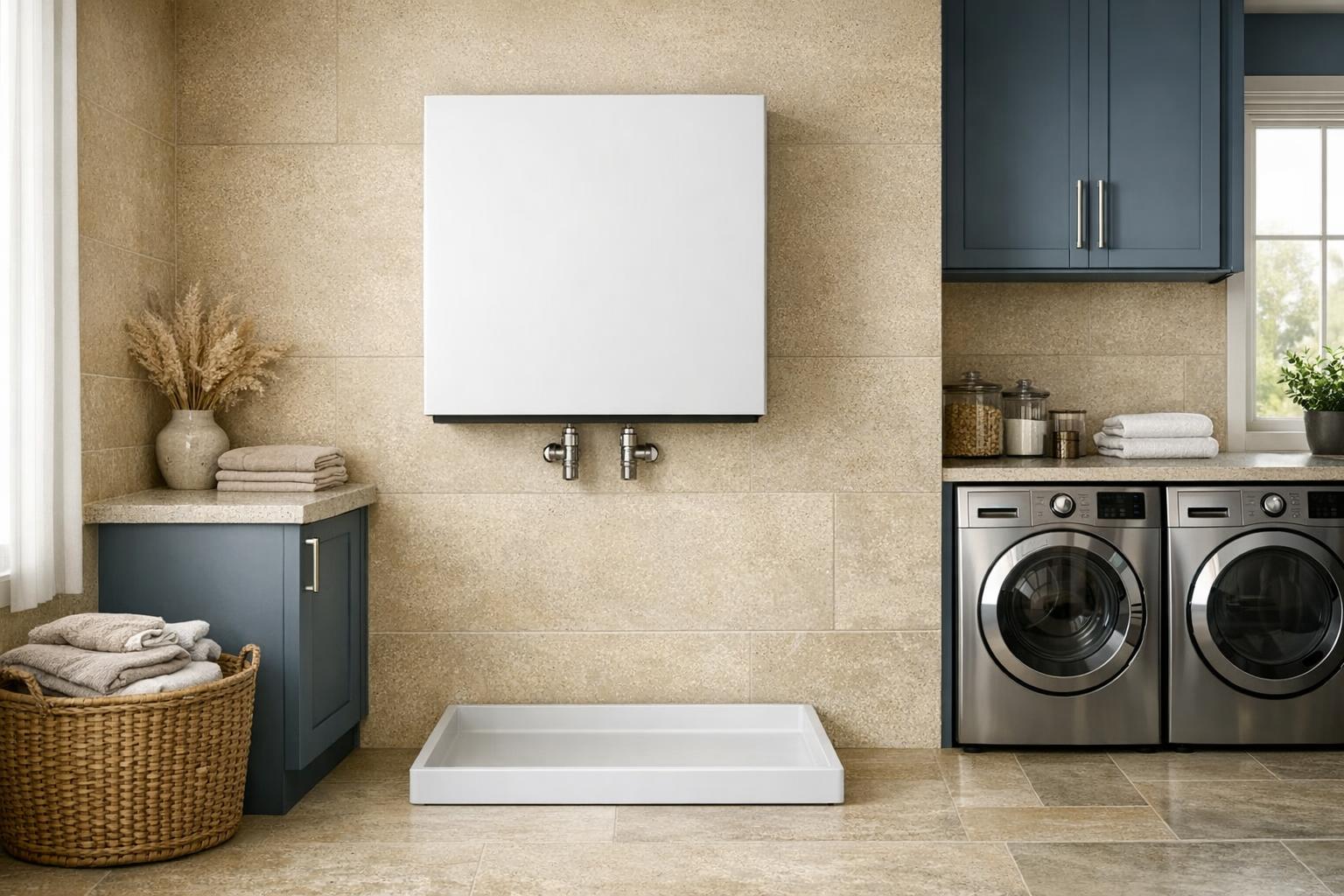
- Ask for isolation valves: if they are not already installed, they simplify every future flush.
- Maintain the neutralizer: condensing units need it kept effective, as PNNL notes.
- Keep records: service dates and receipts support both troubleshooting and warranty claims.
Temperature setting is another lever. The DOE Federal Energy Management Program recommends 120°F for most residential applications, and Rinnai’s warranty is shortened for settings above 160°F.
Repair or replace an aging tankless heater?
Because a tankless heater has no tank to rust through, the end of its life is less abrupt than a leaking storage tank. The DOE Energy Saver page on demand water heaters notes that tankless units have easily replaceable parts that may extend their life by many more years, and that periodic maintenance can significantly extend a water heater’s life and minimize loss of efficiency.
That makes the repair-or-replace question a cost comparison rather than a fixed age. Gather the facts below before a service visit, then ask the technician to put repair and replacement options in writing.
- Age and warranty status: check which coverage period applies to the failed part, using the purchase date or registration.
- Which part failed: a component listed as replaceable is a different decision from a failed heat exchanger.
- Service history: records of descaling and inspections help a technician judge the remaining condition.
- Current needs: if household demand has grown, a repair may keep an undersized heater in service.
If replacement wins, reuse what you learned: the existing gas line, vent and electrical work may already suit a similar model, which can lower the next installation cost. Ask the installer to confirm rather than assume.
Lifespan in the buying decision
A longer life partly offsets the higher upfront cost: PNNL puts the installed cost of a tankless heater at 1½–2 times a tank-type heater, and the longer replacement cycle is one reason the comparison can still favor tankless. Our tankless vs tank comparison and installation cost breakdown put those numbers side by side.
Lifespan also depends on choosing the right unit in the first place. An undersized heater that runs at its limit, or a model installed outdoors in a freezing climate without protection, starts its life at a disadvantage. Start with our choosing guide and the indoor-versus-outdoor guide before you compare warranties.
Sources and further reading
- PNNL Building America Solution Center: Gas-Fired Tankless Water Heaters (U.S. DOE-funded guide)
- Rinnai America: SENSEI Residential tankless water heater limited warranty (PDF)
- A. O. Smith: Tankless Water Heater Installation Guide (manufacturer information center)
- U.S. DOE Federal Energy Management Program: Purchasing Energy-Efficient Residential Water Heaters
- U.S. DOE Energy Saver: Tankless or Demand-Type Water Heaters (archived June 30, 2026)