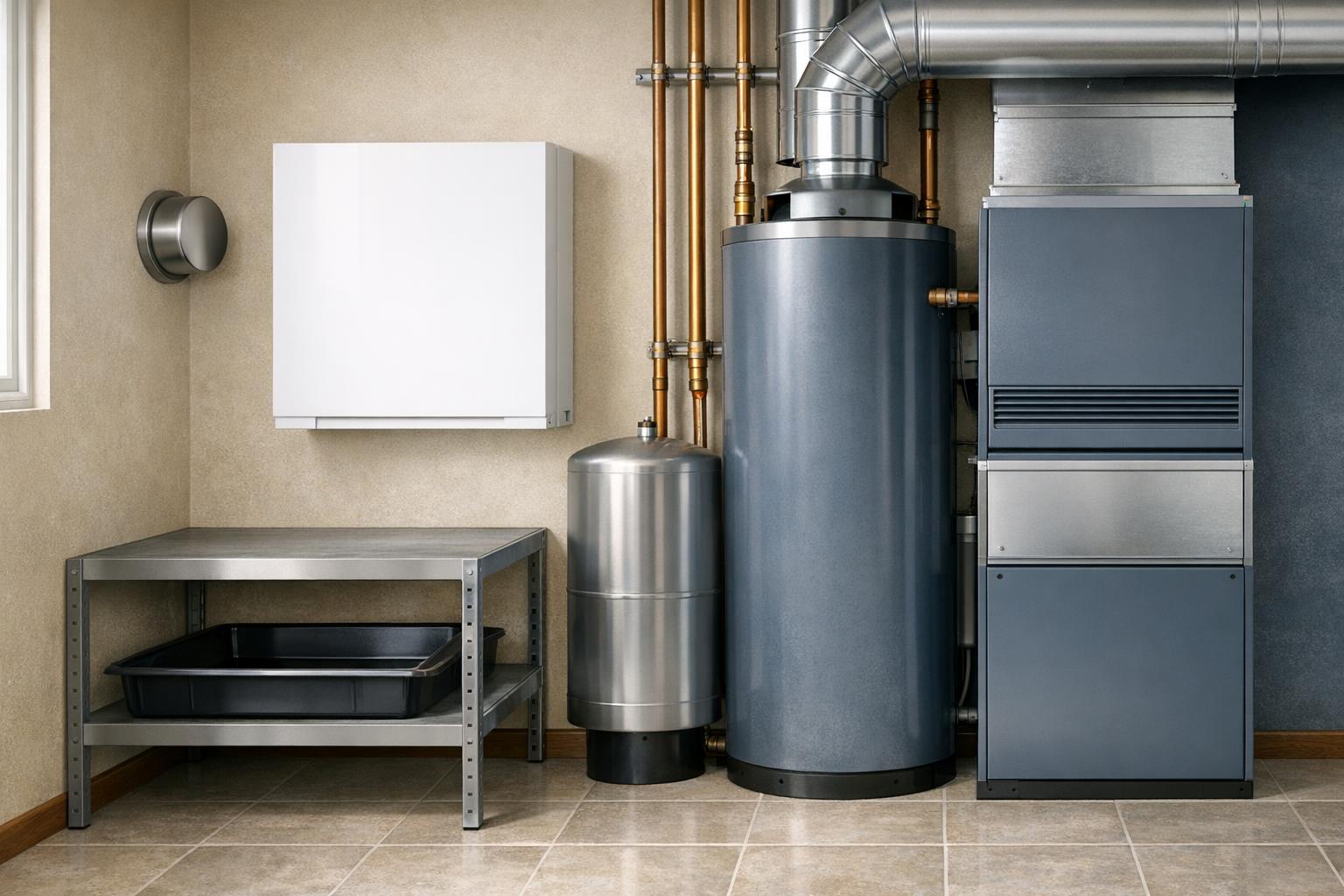
Searching for a tankless water heater installation price usually returns a single national range, but the number that matters is the one for your house. The cost is set less by the heater itself than by what the home has to change to feed, vent and drain it. This guide breaks a tankless quote into its line items, explains which ones apply to gas and electric units using DOE-funded and manufacturer documentation, and shows how to compare written estimates on equal terms. We do not publish a universal price because we have not assessed your property.
How much does tankless installation cost?
Short answer Tankless installation cost depends mainly on the work around the heater: gas-line capacity, a new vent, a condensate drain, or electrical service for electric models. A DOE-funded PNNL guide puts the initial installed cost of a tankless heater at 1½–2 times that of a tank-type heater, and A. O. Smith notes installation is usually more expensive for gas models.
That ratio is the most defensible general statement we found. Equipment and labor prices vary by region, and PNNL also notes that installation can sometimes be cheaper than a gas tank when a flue or chimney is no longer needed. The practical approach is to identify which of the following items your project needs, then get at least two itemized written quotes.
- Unit price: the heater itself, which varies with fuel, input and condensing design.
- Fuel or power supply: gas-line upsizing or electrical service and breaker work.
- Venting and condensate: a new vent route for gas units and a drain for condensing models.
- Paperwork and disposal: permits where required and removal of the old heater.

The line items behind a tankless quote
Use this table to read a quote line by line. Each row states when the item typically applies and where the requirement comes from, so you can ask why an item is present, or why it is missing.
| Line item | When it applies | What the documentation says |
|---|---|---|
| Gas line upsizing | Gas units, especially replacing a tank | PNNL: most tankless gas heaters need at least a ¾-inch line; ½-inch-fed units typically top out around 150,000 Btuh |
| New vent pipe | Gas units replacing an atmospheric tank | PNNL: you will likely need a new vent; high-efficiency units use PVC or stainless steel |
| Condensate drain and neutralizer | Condensing gas units | PNNL: condensate must be drained per local code; a neutralizer is recommended |
| Electrical service and breakers | Electric whole-house units | A. O. Smith: 51 A for 12.2 kW up to 133 A for 32 kW at 240 V; breakers 40–70 A |
| Isolation (flush) valves | All units, for future descaling | PNNL: adding these valves during installation is a small cost |
| Permit and code compliance | Most jurisdictions | A. O. Smith: the installation must comply with local and national codes |
| Old heater removal | Replacement jobs | A. O. Smith: the old unit can go to a recycling center or scrapyard |
Gas models: fuel line, venting and condensate
Gas tankless heaters have far larger burners than tanks. PNNL gives the example of a tankless unit that might require 199,900 BTU while a typical tank requires about 40,000 BTU of gas capacity. Both the trunk line from the meter and branch lines may need to be larger so that every gas appliance can run at once without excessive pressure drop. Some manufacturers offer units that run on a ½-inch line, but PNNL notes their capacity typically tops out around 150,000 Btuh.
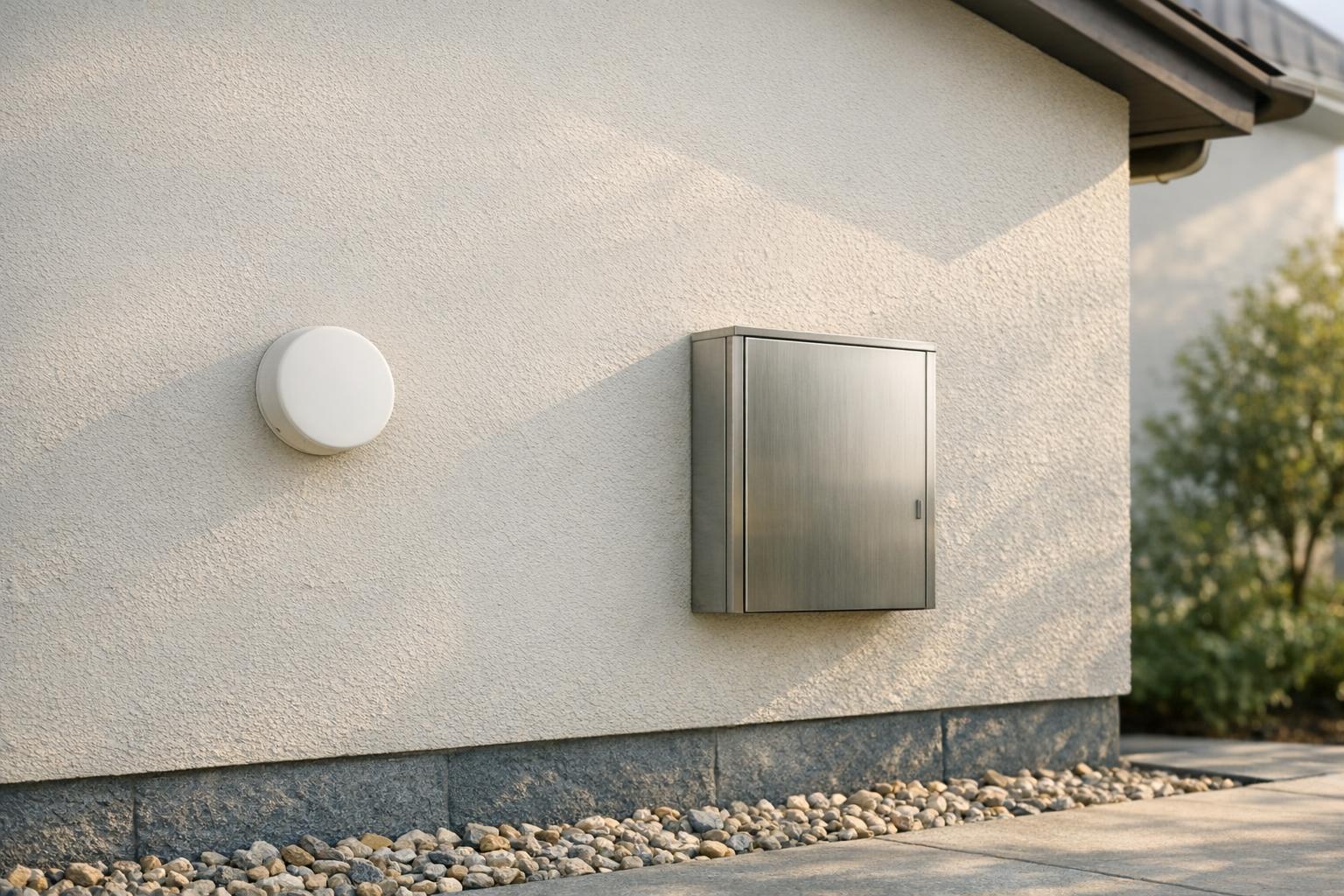
Venting is the second big item. Most fuel-fired tankless heaters are direct-vent, often through a sidewall. That can simplify a new build, but in an existing home it may mean relocating the heater toward an outside wall. If the old tank shared a chimney flue with a furnace, PNNL warns about an “orphaned flue” and recommends having the contractor test the furnace draft after the change.
Condensing models, which use a second heat exchanger, need a condensate drain line; PNNL recommends a neutralizing system because the condensate is slightly acidic. Our condensing guide and natural gas versus propane guide cover how those choices affect scope. A. O. Smith stresses specifying the correct fuel because natural gas and propane combustion requirements differ.
Electric models: the panel is the cost question
Electric tankless heaters need no vent, which removes one line item, but they move the cost to the electrical service. A. O. Smith documents that smaller 12.2 kW units draw 51 amps on a 240-volt supply, while the largest 32 kW units draw 133 amps at 240 volts or 135 amps at 208 volts. Larger units use two circuits and two double-pole breakers, with breaker sizes from 40 to 70 amps depending on the model.
Whether a home can supply that current, and whether the service needs an upgrade, is an assessment for a licensed electrician using the exact installation manual. We do not give wiring instructions. Our electrical-requirements guide explains which documents to gather, and the whole-house electric comparison lists each model’s documented kW and voltage.
- Ask first: the total amperage the model needs and how many breakers it uses.
- Then ask: whether the existing panel and service have spare capacity for that load.
- Get in writing: whether the quote includes any service or panel upgrade, or only the circuits.
Costs that rarely appear on the box
Several smaller items decide whether two quotes are really comparable. PNNL lists valves, expansion tanks and piping needed for performance and maintenance as part of a proper installation, and recommends a backup drain pan. Rinnai’s residential warranty lists the absence of a drain pan, improper venting, incorrect gas type and incorrect gas or water pressure among installation problems it does not cover, so leaving them out of a quote is not a real saving.
Placement matters too. Outdoor-rated units avoid indoor venting, but PNNL notes that outdoor installation generally suits only warm climates unless freeze protection is used for the unit and its pipes. Our indoor-versus-outdoor guide covers that choice.
How to compare installation quotes
Ask every installer to price the same model and the same scope, then compare line by line. Rinnai recommends installation by a trained, qualified professional and states that improper installation may void its warranty, which makes the installer’s scope part of the product you are buying.
- Same model, same fuel: confirm the full model number and natural gas or propane configuration on every quote.
- Itemized trades: gas, venting, condensate, electrical, permit and removal listed separately.
- Sizing assumptions: the flow rate and temperature rise used to select the unit, as in our sizing guide.
- Warranty and registration: who registers the heater and who handles labor claims in the first year.
For payback, an illustrative formula is: payback years = (tankless installed cost − tank installed cost) ÷ annual energy-cost savings. Use your own quotes and utility rates; the result changes a lot with household hot-water use. To weigh the whole decision, see tankless vs tank water heaters and how long a tankless heater lasts.